New ponds
Fishing ponds, wildlife ponds, and backyard ponds dug and shaped for what you want to use them for.
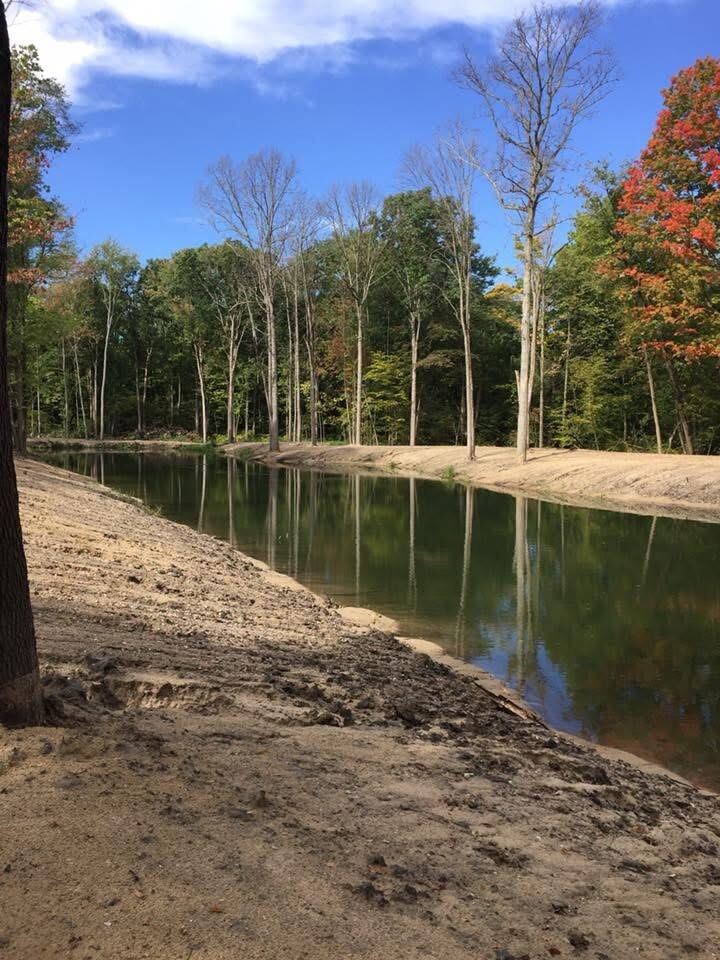
Dug, shaped, and finished. From a backyard water feature to something the kids can fish out of. We plan the depth, the slopes, and the overflow so it holds water and stays healthy.
Walker Precision Excavating digs new ponds and cleans out and reshapes existing ones within about 70 miles of Constantine, Michigan, in both Michigan and Indiana. Josh Walker plans the depth, bank slopes, and overflow before digging so the pond holds water, keeps its shape, and does not flood the yard in a wet spring.
A pond that holds water, doesn't erode at the banks, and doesn't flood the yard in a wet spring comes down to three things: depth planned for your water table and use, bank slopes cut at the right angle, and an overflow that actually works. We plan all three before we dig.
Whether you want a fishing pond, a wildlife pond, or a backyard water feature, the shaping matters, shelves for vegetation, deeper water where fish need it to survive winter, and banks stable enough that they don't slump in a few years.
Already have a pond that's silted in, overgrown, or losing water? We do cleanouts and re-shaping on existing ponds too, not just new digs.
Fishing ponds, wildlife ponds, and backyard ponds dug and shaped for what you want to use them for.
Old ponds that have silted in, grown over, or started losing water dug back out and reshaped.
Banks cut at a slope that holds, shelves where you want plants, deeper water where fish need it, and an overflow that handles a hard rain.
The soil decides. Clay holds water. Sand and gravel let it drain away. This part of Michigan and Indiana has both, sometimes a few hundred feet apart, so the first step is finding out what is actually under your site.
The water table matters too. Some ponds fill from groundwater, and others depend on runoff. We look at the site, and where it makes sense we dig test holes before anyone commits to a full pond.
Many small ponds on dry upland ground do not need a state permit, but several common situations do. In Michigan, a pond in or near a wetland, connected to a stream, within 500 feet of a lake or stream, in a regulated floodplain, or five acres or larger generally needs a permit from the state. A county soil erosion permit can also apply.
Indiana has its own rules. The safe move in either state is to check before the excavator shows up. We will tell you who to call for your property.
Ponds are quoted after we see the site. These are the things that set the price.
We talk through what the pond is for, whether that is fishing, wildlife, or looks, and plan the depth and shape around it.
Banks, shelves, and slopes cut to hold their shape and support the pond's intended use.
Overflow point set so heavy rain doesn't wash out the banks or flood surrounding ground.
Surrounding ground graded and left clean, ready for seeding or landscaping.
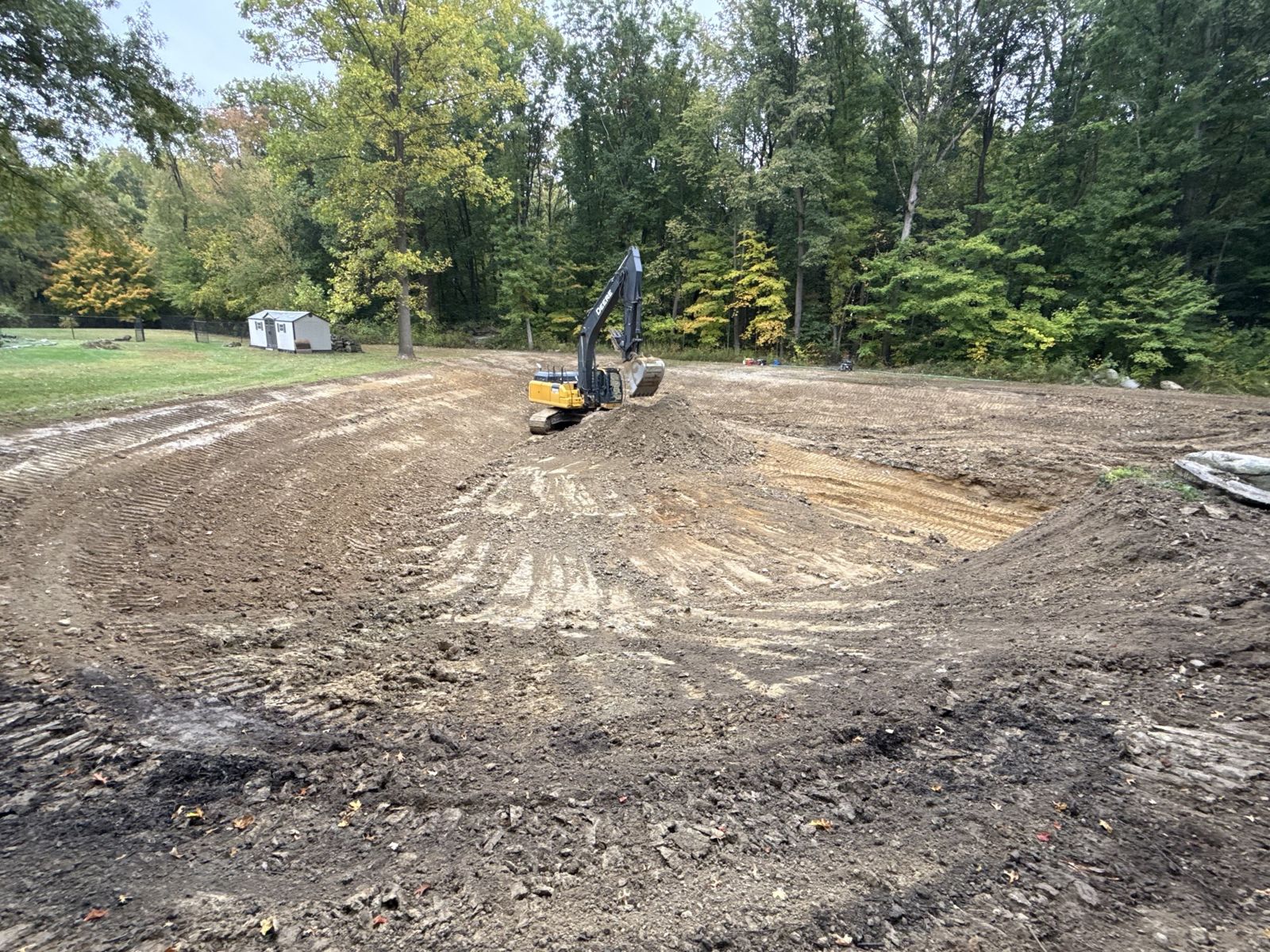
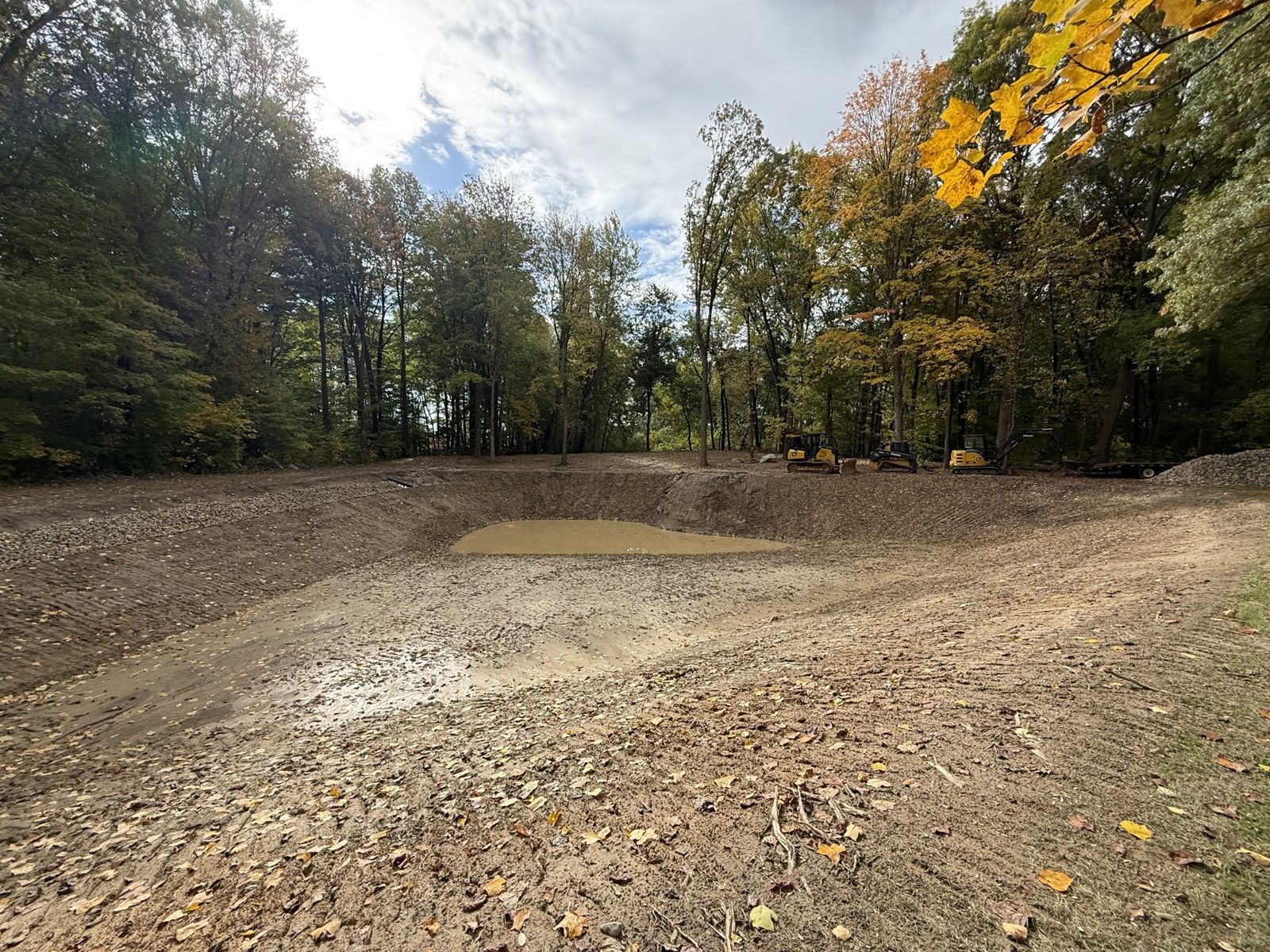
Depth needs vary by species and how well the pond needs to resist winter freeze-out. We'll walk through that when we plan your site.
Yes, pond cleanouts and reshaping are part of our regular pond work, not just new construction.
Yes, overflow planning is part of every pond we build so the banks aren't taking on damage every storm.
Sometimes. Ponds in or near wetlands, connected to a stream, within 500 feet of a lake or stream, or five acres or larger generally need state approval, and a county soil erosion permit may apply. Check before digging. We can point you to the right office.
It depends on the size, the soil, and how wet the site is. A small pond on dry ground can go quickly. A large pond or a mucky cleanout takes longer. You get a schedule with your quote.
Yes. We work within about 70 miles of Constantine, Michigan, which covers St. Joseph and Cass counties in Michigan and the South Bend, Elkhart, and Goshen area in Indiana.
Last updated November 2026.